B2B SaaS GEO agencies help software companies improve their visibility and citations across AI search platforms such as ChatGPT, Google Gemini, Perplexity, and Google AI Overviews. Their work typically covers AI visibility audits, citation gap analysis, entity optimization, content strategy, third party authority, digital PR, technical SEO, and ongoing prompt monitoring. A strong GEO strategy focuses on getting a SaaS brand mentioned by relevant AI systems and supported by credible sources, not simply adding keywords to a website. When evaluating a GEO agency, look for evidence of real citations, B2B SaaS experience, transparent methodology, multi platform monitoring, credible third party sources, and a clear connection between AI visibility, qualified traffic, leads, and pipeline.
A B2B SaaS buyer does not always start with Google anymore.
They might open ChatGPT and ask, “What are the best CRM platforms for a growing SaaS company?” They might ask Gemini to compare two products, or use Perplexity to find alternatives to a tool they already know.
That creates a different visibility problem for software companies.
Ranking on page one still matters. But now another question matters too: does your SaaS brand appear when an AI system answers the question your potential customer is asking?
That is where B2B SaaS GEO agencies come in.
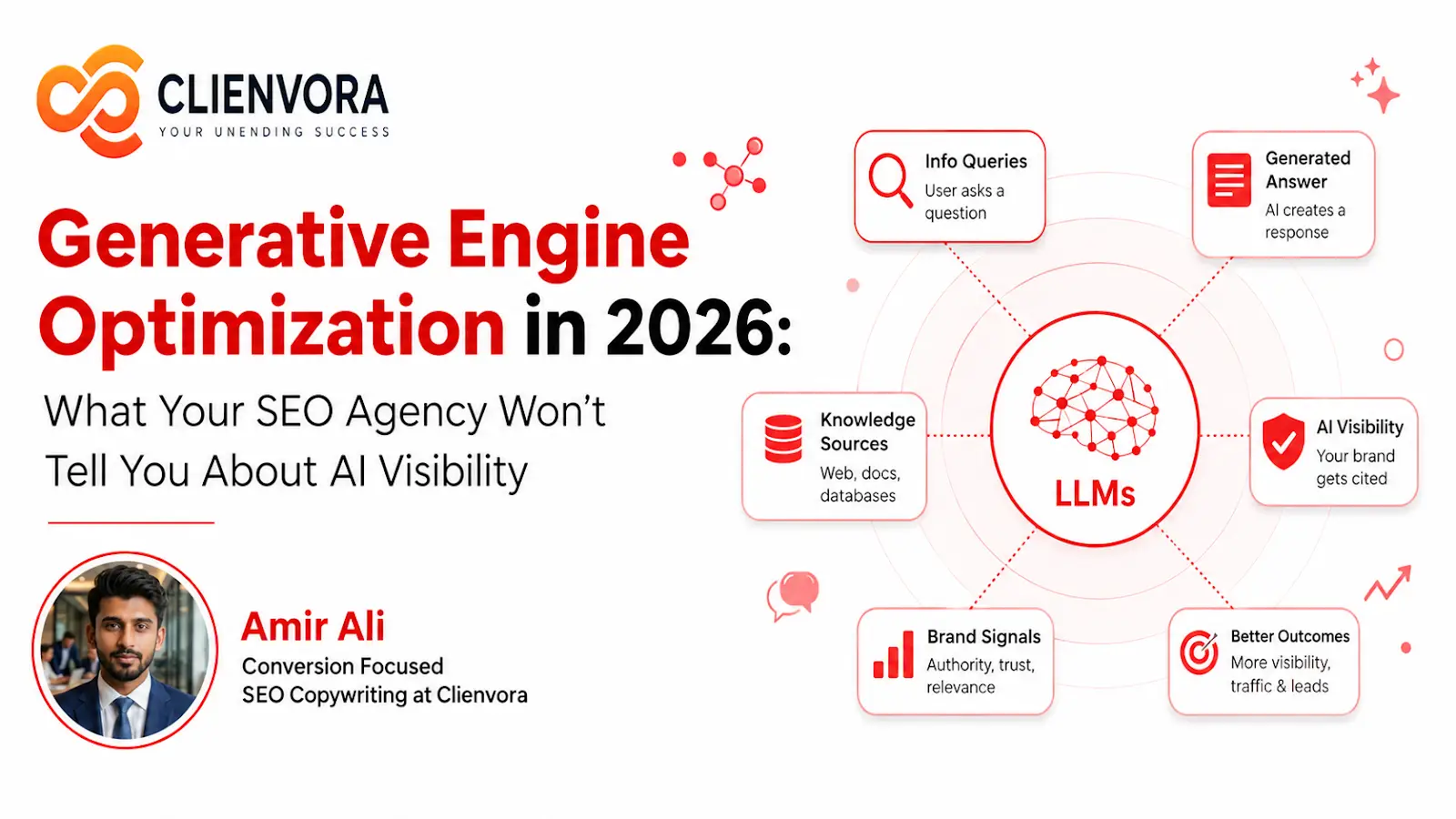
Generative Engine Optimization, usually called GEO, focuses on improving a brand's visibility in AI generated answers, recommendations, and citations. Depending on the provider, the work may include prompt research, content optimization, technical SEO, entity optimization, digital PR, third party authority building, citation monitoring, and attribution.
But there is a problem.
The GEO agency market is moving quickly, and the terminology is still inconsistent. One agency may call its service GEO. Another may call it AI SEO, AEO, LLM optimization, AI search optimization, or AI visibility.
The services can overlap, but they are not automatically identical.
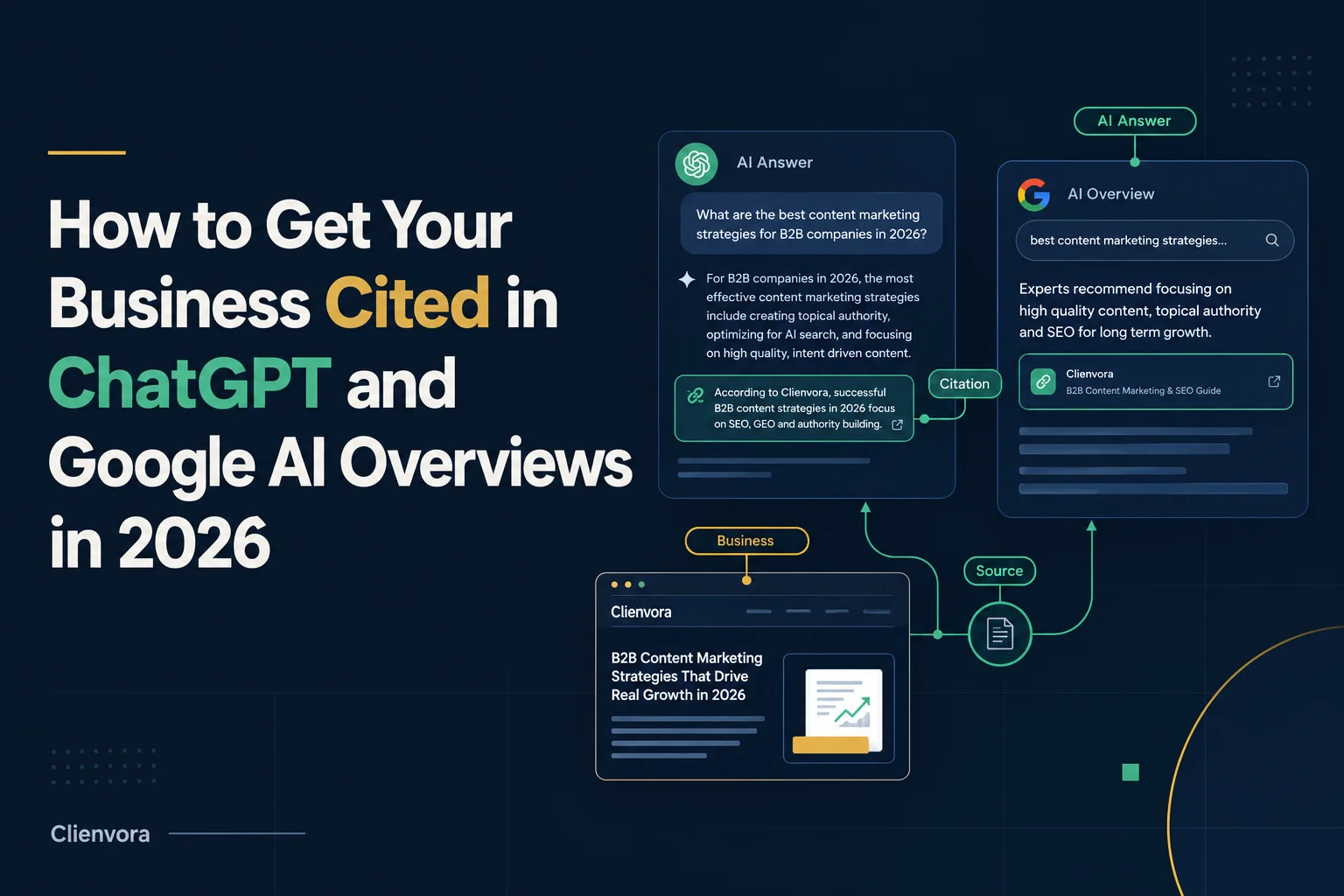
This guide explains what B2B SaaS GEO agencies actually do, how citation strategies work, what you should measure, what questions you should ask before hiring one, and how to separate useful evidence from agency marketing claims. For the step-by-step citation process itself, see our guide to getting cited in ChatGPT and Google AI Overviews.
It also explains how to evaluate agencies without simply copying another website's “best GEO agencies” list.
What is a B2B SaaS GEO agency?
A B2B SaaS GEO agency helps software companies improve their visibility across AI search and answer experiences.
That can include ChatGPT, Google Gemini, Perplexity, Google AI Overviews, Claude, Microsoft Copilot, and other systems that retrieve, summarize, or generate answers from information available on the web.
The goal is not simply to make a page rank for a keyword.
The broader objective is to increase the chances that an AI system understands the company, recognizes its relevance to a buyer's question, mentions the brand when appropriate, and cites useful pages or third party sources that support the answer.
A B2B SaaS GEO agency therefore sits somewhere between SEO, content strategy, digital PR, technical optimization, analytics, and brand authority.
That combination matters because SaaS buyers rarely ask only one type of question.
They may ask which products are best, which tools are alternatives, which platform works for a specific industry, which solution integrates with another system, or which product makes sense for a company of a particular size.
Those questions create a much larger prompt universe than a traditional keyword list.
Current B2B SaaS agency research reflects this shift. Recent agency studies and comparison pages focus on buyer prompts, AI citation visibility, competitor citation share, SaaS specialization, and connecting AI visibility to pipeline rather than treating GEO as another name for blog writing.
Why does B2B SaaS need a different GEO strategy?
A SaaS company has a complicated buying journey.
A potential customer might first search for a category, then compare products, then investigate alternatives, then research pricing, integrations, security, implementation, and customer experience.
AI systems can participate in every stage.
Imagine a company looking for project management software.
The first question might be:
“What are the best project management tools for a remote engineering team?”
Later, the buyer may ask:
“ClickUp vs Asana for a 50 person software company.”
Then:
“What are the best ClickUp alternatives?”
Then:
“Which project management platform integrates best with Slack and GitHub?”
Each question creates a different opportunity for visibility.
A SaaS company that appears for only its branded query may still be almost invisible during category discovery.
That is why B2B SaaS GEO needs to look beyond branded mentions.
It needs to understand the relationship between the company, product, category, features, use cases, competitors, integrations, customers, industries, and alternatives.
What services do B2B SaaS GEO agencies offer?
There is no universal GEO service package.
However, the agencies appearing in current 2026 research tend to concentrate around several recurring activities.
AI visibility and prompt auditing
A serious GEO program usually starts with measurement.
The agency creates a set of buyer prompts and tests how AI systems respond.
The prompts might cover category discovery, product comparisons, alternatives, use cases, industries, integrations, pricing, and high intent commercial questions.
For example:
“What are the best CRM platforms for a 20 person B2B SaaS company?”
The agency records whether the client's brand appears.
It can then record whether the brand was recommended, where it appeared, which source was cited, which competitors appeared, and which pages supported the answer.
The same test can run across multiple AI platforms.
That produces a baseline.
Without a baseline, “AI visibility increased” does not tell you much.
A recent DerivateX study illustrates the type of methodology now appearing in this market. The agency reports testing 50 B2B SaaS companies across 1,400 buyer prompts and comparing how ChatGPT, Gemini, Claude, and Perplexity handled those companies. This is agency published research, so its methodology and findings should be treated as first party research rather than independent verification.
Citation gap analysis
The next step is finding where competitors receive citations that your brand does not.
Suppose three competitors repeatedly appear in answers about a particular SaaS category.
The agency examines the sources behind those recommendations.
Perhaps the competitors have strong G2 profiles.
Perhaps industry publications mention them.
Perhaps several comparison articles describe their features.
Perhaps customers discuss them on Reddit.
Perhaps the companies have published original research that other sites reference.
The objective is not simply to collect backlinks.
The objective is to understand the information ecosystem surrounding the category.
A useful citation gap analysis should answer a basic question:
Why does the AI system have more evidence to recommend this competitor than our client?
Entity optimization
SaaS companies have more than keywords.
They have entities and relationships.
A product belongs to a company.
The product belongs to one or more categories.
It serves particular industries.
It has specific features.
It integrates with other products.
It competes with alternatives.
It has customers and use cases.
A GEO strategy should make those relationships clear and consistent across the website and relevant external sources. See our entity copywriting guide for how to write those relationships into your pages.
Structured data can support machine understanding, but it should not be sold as a magic citation button.
Google states that structured data helps its systems understand page content, but it also explicitly says that structured data does not guarantee a particular search appearance.
That distinction matters.
Content optimization for AI search
AI systems need useful information to answer questions.
That means B2B SaaS GEO often includes content work.
But “write more blog posts” is not a sufficient strategy.
Useful content might include comparison pages, alternatives pages, use case pages, integration pages, industry pages, original research, product documentation, expert content, and detailed guides.
A page answering “best CRM for healthcare SaaS companies” has a different purpose from a generic article titled “What is CRM?”
The first page addresses a specific buyer situation.
That specificity can make it more useful for both users and retrieval systems. Our content strategy services build these page types around real buyer prompts.
Third party citation building
This is one of the most important areas to understand.
A company can publish hundreds of pages about itself.
That does not mean independent websites will validate those claims.
AI systems may encounter information from review platforms, communities, industry publications, comparison sites, directories, research reports, and other websites.
That creates an external information ecosystem around the brand.
Depending on the market, relevant sources may include G2, Capterra, TrustRadius, Product Hunt, Reddit, LinkedIn, industry publications, software directories, analyst publications, podcasts, and expert communities.
The goal should not be to manufacture mentions.
It should be to create useful information and legitimate external references that help establish the company's identity, expertise, product category, and reputation.
Digital PR
Digital PR can support GEO because original research gives other publishers something worth discussing.
A SaaS company could publish a survey of its industry.
It could analyze thousands of anonymized data points.
It could conduct a benchmark study.
It could interview industry experts.
It could publish a report showing changes in software adoption.
These assets can attract citations and mentions from external sources.
That is more defensible than publishing ten generic articles simply because an agency promises a certain number of monthly posts. Done properly, that is what link building services look like in an AI search world.
Reddit and community visibility
Community discussions deserve separate attention.
People ask genuine software questions on Reddit and other communities.
They ask which tools work, which alternatives exist, what problems a product solves, and which vendors other people have used.
Those conversations can become part of the information environment surrounding a SaaS brand.
But this area requires restraint.
A GEO agency should not flood communities with promotional posts or manufacture fake customer experiences.
Useful participation means answering real questions, providing evidence, disclosing affiliations where appropriate, and contributing information that stands on its own.
Technical GEO
Technical optimization still matters.
But it is important to separate established SEO requirements from speculative GEO tactics.
Google's current documentation says that the same foundational SEO practices remain relevant to AI Overviews and AI Mode. A page needs to be indexed and eligible for normal Google Search to be eligible as a supporting link in those AI experiences. Google does not specify a separate set of special technical requirements for AI Overviews or AI Mode. For the full checklist behind that foundation, see our technical SEO audit guide.
That means agencies should still examine:
- Crawlability.
- Indexability.
- Robots.txt.
- XML sitemaps.
- Canonical URLs.
- Internal links.
- HTTP status codes.
- JavaScript rendering.
- Rendered page content.
- Mobile accessibility.
- Core Web Vitals.
- Duplicate content.
- Orphan pages.
- Structured data.
- Metadata.
- Content accessibility.
A technical GEO audit should improve the site's ability to be crawled, understood, and retrieved.
It should not simply add trendy terminology to a conventional technical SEO report.
What is a B2B SaaS citation strategy?
A citation strategy starts with questions rather than keywords.
First, identify what buyers actually ask.
Then identify which competitors appear.
Then identify which sources support those competitors.
Then determine which gaps are realistically fixable.
A useful framework looks like this:
Buyer prompt → AI answer → brand visibility → cited sources → competitor sources → content gap → authority gap → optimization → monitoring
Suppose an AI system repeatedly recommends three competitors for a specific category.
You discover that the same industry publication appears in several answers.
You also find that two comparison websites discuss those competitors but do not mention your client.
That gives you a much more actionable problem than “we need more backlinks.”
The question becomes:
Can the client create something genuinely useful enough to earn inclusion in those information ecosystems?
That might involve original research, a stronger comparison page, expert commentary, digital PR, customer evidence, or better product documentation.
How do AI engines find sources for B2B SaaS answers?
There is no single universal AI citation algorithm.
Different platforms can retrieve information differently.
Google's AI search experiences use Google's Search systems as part of the process. Google describes AI Overviews and AI Mode as using techniques including query fan out, where related searches can be performed across subtopics and data sources before the system generates a response.
Other AI systems have their own retrieval and search architectures.
That is why you should not assume that improving visibility in one platform guarantees visibility in another.
The B2B SaaS citation research published by DerivateX demonstrates this variation. In its study of 50 SaaS companies and 1,400 prompts, the agency reports different visibility patterns across ChatGPT, Gemini, Claude, and Perplexity. Again, those findings are first party research and should be interpreted accordingly.
This is why multi platform monitoring matters. Our AI citation guide includes a fixed prompt set and a monthly tracking template for that job.
ChatGPT
A GEO program may track whether ChatGPT mentions the brand, recommends it, or cites its website and external sources.
The exact response can vary based on the prompt, search availability, location, date, and other factors.
Google Gemini
Gemini can surface different sources and recommendations from other systems.
A brand that performs well in ChatGPT may not necessarily receive identical treatment in Gemini.
Perplexity
Perplexity is particularly useful to monitor when citation visibility matters because its answers commonly expose supporting sources directly.
This makes it easier to investigate which domains appear behind recommendations.
Google AI Overviews and AI Mode
Google's AI search experiences operate within Google's broader Search ecosystem.
Google says its AI features use relevant links to help users explore information and that traditional SEO best practices continue to apply.
The practical lesson is simple.
Do not create a separate “AI tricks” strategy that ignores conventional SEO quality.
Build strong content and make it technically accessible first. Our AIO and GEO guide covers both surfaces in detail.
How do you measure B2B SaaS GEO?
Visibility metrics are useful.
They are not enough.
A good reporting system should separate visibility from business outcomes.
AI visibility metrics
Track how frequently the brand appears across a defined prompt set.
You can calculate:
- Mention rate.
- Recommendation rate.
- Citation rate.
- Citation share.
- Prompt coverage.
- Competitor share.
- Cited URL frequency.
- Platform specific visibility.
The important word is defined.
If an agency changes the prompts every month, its visibility percentage becomes difficult to compare.
AI referral traffic
Use analytics to identify visits arriving from AI systems where the analytics platform can reliably identify the referral.
Look at:
- Sessions.
- Engagement.
- Landing pages.
- New users.
- Returning users.
- Conversions.
Leads
For a B2B SaaS company, measure actions such as:
- Demo requests.
- Free trials.
- Contact forms.
- Product signups.
- Sales qualified leads.
- Enterprise inquiries.
Pipeline
This is where the measurement becomes more meaningful.
If a company receives 1,000 AI generated visits but none become qualified opportunities, the visibility number alone does not tell the complete story.
A smaller number of high intent visitors can be more commercially meaningful.
Recent 2026 agency comparison pages increasingly emphasize pipeline attribution instead of treating citation counts as the final objective.
The principle is straightforward:
A citation is not a conversion.
A mention is not revenue.
An AI visibility score is not automatically business growth.
A credible GEO program should explain the connection between visibility and commercial outcomes.
How much does a B2B SaaS GEO agency cost?
There is no universal GEO price.
Current 2026 agency comparison pages show substantial differences in published pricing, with some specialist providers publishing monthly entry points and others requiring a custom proposal.
Pricing can depend on the scope.
A one time GEO audit is different from an ongoing content and authority program.
A startup with one product is different from an enterprise SaaS company with multiple product lines and markets.
Common models include:
- Monthly retainers.
- Project based GEO audits.
- Citation monitoring.
- Content led GEO programs.
- Technical SEO and GEO projects.
- Digital PR programs.
- Enterprise AI search programs.
When comparing prices, compare deliverables.
A $4,000 monthly program that includes technical optimization, research, content, digital PR, monitoring, and reporting is not equivalent to a $4,000 program that only produces blog posts.
How should you evaluate a B2B SaaS GEO agency?
This is where buyers should slow down.
The GEO market contains many agencies making strong claims about AI visibility.
A buyer needs a way to evaluate those claims.
Does the agency actually specialize in B2B SaaS?
Ask how many SaaS clients it has worked with.
Ask which categories it understands.
Ask whether its clients are B2B or B2C.
Ask whether it works with enterprise SaaS, startups, PLG companies, sales led companies, or a mixture.
SaaS has specific search behavior.
An agency that mainly works with local businesses may not understand SaaS comparison queries, product alternatives, integration searches, software directories, or long enterprise buying cycles.
Can the agency show actual citation evidence?
Ask to see baseline data.
Ask how many prompts were tested.
Ask which platforms were tested.
Ask what counted as a citation.
Ask for examples of cited URLs.
Ask whether the result was measured before and after the campaign.
A screenshot of one favorable AI answer is not enough.
Does the agency measure multiple AI platforms?
If an agency says it provides AI search optimization, ask which systems it actually monitors.
- ChatGPT?
- Gemini?
- Perplexity?
- Google AI Overviews?
- Claude?
- Copilot?
The answer should match your target customers.
Can the agency explain its methodology?
A credible process should be understandable.
You should know what happens after signing.
A reasonable process might look like:
Discovery → baseline measurement → prompt research → competitor analysis → citation gap analysis → technical work → content work → authority building → monitoring → attribution
If the agency cannot explain what it actually does, be cautious about buying a vague “AI visibility” package.
Does it understand third party authority?
Ask which external sources matter for your category.
If your competitors repeatedly receive citations from industry publications, review platforms, communities, and comparison pages, your agency should know how to investigate those sources.
Can it connect visibility to pipeline?
This question separates a visibility report from a business report.
Ask:
“How will you determine whether increased AI visibility contributes to qualified leads?”
The answer should involve analytics, attribution, prompt tracking, conversion measurement, or a clearly explained proxy methodology.
Questions to ask before hiring a B2B SaaS GEO agency
Before signing a contract, ask:
- Which AI platforms do you monitor?
- How do you define an AI citation?
- How do you measure citation share?
- How many buyer prompts do you track?
- Can you show baseline visibility?
- Can you show actual cited URLs?
- How do you identify citation gaps?
- How do you analyze competitors?
- How do you approach third party sources?
- How do you handle community visibility?
- What technical GEO work do you perform?
- How do you handle structured data?
- How do you measure AI referral traffic?
- How do you connect AI visibility to leads?
- How often do you report results?
And ask one question that agencies may not expect:
Which of your results are independently verified, and which come from your own case studies?
That question can save you from treating marketing material as independent evidence.
B2B SaaS GEO agency red flags
Be cautious when an agency makes absolute promises.
For example:
“We guarantee ChatGPT rankings.”
ChatGPT does not operate like a conventional ten result Google ranking page.
“We guarantee citations in 30 days.”
Ask what the guarantee actually means.
“We increased AI visibility by 300%.”
Ask how visibility was calculated.
“We generated 500 citations.”
Ask what the agency counts as a citation.
“We increased ChatGPT traffic.”
Ask whether the traffic produced leads or revenue.
“Just add schema and AI will understand your website.”
Structured data can help search engines understand content, but Google explicitly says structured data does not guarantee a search appearance.
“Just add an llms.txt file.”
Treat this as an emerging practice, not a guaranteed visibility mechanism. Our llms.txt guide shows how to set the file up and what it can actually do.
The same principle applies to every GEO tactic.
Ask for evidence.
How should you evaluate GEO agency case studies?
Agency case studies can be useful.
They can also be marketing material.
That does not make them worthless.
It means you should read them carefully.
Suppose an agency says:
“AI citations increased 200%.”
Ask what the baseline was.
Ask how many prompts were tested.
Ask which platforms were included.
Ask how long the campaign lasted.
Ask whether the same prompts were used before and after.
Ask whether the cited URLs changed.
Then ask whether the increase resulted in traffic.
Then ask whether the traffic resulted in qualified leads.
Then ask whether those leads entered the sales pipeline.
A strong case study should make that chain easier to understand.
A simple evidence framework
- Client identity: Is the client named?
- Baseline: Does the study show where the client started?
- Prompt set: How many buyer prompts were tested?
- Platforms: Which AI systems were included?
- Time period: How long was the campaign?
- Citation measurement: What qualifies as a citation?
- Traffic: Is analytics data presented?
- Conversions: Are actual conversion events measured?
- Revenue: Is revenue attribution explained?
- Independent verification: Has an external party verified the result?
This framework is particularly useful because current agency comparison content often relies on agency published case studies. Some newer comparison sites explicitly distinguish first party evidence from independent verification, which is a useful standard for buyers.
B2B SaaS GEO agencies to research
There is already significant competition around this topic.
Recent 2026 comparison and research pages have discussed agencies including DerivateX, iPullRank, NoGood, Skale, Growthner, Omniscient Digital, TripleDart, First Page Sage, Minuttia, Animalz, Siege Media, Obility, Rock The Rankings, SimpleTiger, and others.
Other searches and the Gemini and Perplexity experiments we conducted surfaced names such as Arobis AI, Clickstrike, Mersel AI, Marcel Digital, and additional providers.
There is an important problem here.
The lists do not agree.
Different publishers produce different agency lists, and some agency comparison articles are written by agencies that also appear in their own lists.
That does not automatically invalidate the content.
It does mean you should not copy another site's rankings and present them as objective fact.
For this article, a better approach would be to publish the evaluation criteria first, then investigate agencies against those criteria.
That makes the page more useful than another arbitrary “number one agency” list.
What does the current agency research tell us?
Our research across search results, Gemini, and Perplexity produced an interesting pattern.
DerivateX appeared repeatedly.
It has a dedicated B2B SaaS GEO service and also publishes research about citations across major AI platforms. Its own research reports testing 50 B2B SaaS companies across 1,400 buyer prompts.
Omniscient Digital appeared repeatedly.
It is frequently associated with content led SaaS visibility and AI search strategy in current comparison content.
Minuttia appeared across multiple research results.
Its positioning includes AI visibility alongside SEO and content for SaaS companies.
First Page Sage appeared repeatedly.
Current comparison content associates it with research driven GEO and enterprise visibility.
iPullRank also appeared repeatedly.
Current comparisons associate it with technical and enterprise oriented GEO work.
But repeated appearance is not proof of superiority.
It is a cross source discovery signal.
That distinction should remain clear throughout this article.
How we would research B2B SaaS GEO agencies
A better agency comparison should begin with a transparent methodology.
For every agency, check whether it has:
- B2B SaaS specialization.
- A dedicated GEO or AI search offering.
- Evidence of AI citation work.
- A documented methodology.
- Prompt monitoring.
- Multi platform tracking.
- Relevant case studies.
- Pricing information.
- Third party reviews.
- Named team members.
- Original research.
- Pipeline attribution.
Then distinguish the evidence.
An agency service page is self reported service evidence.
An agency case study is self reported performance evidence.
A Clutch review is third party customer feedback, although review platforms still require context.
An independent editorial investigation is different again.
A research study can be valuable without being independent if its methodology is transparent.
The point is not to eliminate first party evidence.
It is to label it correctly.
How Clienvora could approach B2B SaaS GEO
For a company like Clienvora, the opportunity is not simply to sell another version of SEO.
The stronger positioning is a connected process.
Start with the SaaS entity
Clarify the company, product, category, features, use cases, integrations, competitors, and customers.
Build the buyer prompt universe
Map the questions buyers actually ask.
- Category questions.
- Comparison questions.
- Alternative questions.
- Use case questions.
- Industry questions.
- Integration questions.
- Pricing questions.
- Problem based questions.
Establish an AI visibility baseline
Test the target prompts across relevant AI systems.
Record the brand's presence and the sources supporting the answers.
Analyze citation gaps
Find the sources that competitors receive citations from.
Then determine which gaps are realistic to address.
Improve the website
Strengthen important product, category, use case, comparison, and educational pages.
Fix technical problems that prevent effective crawling or indexing.
Use appropriate structured data where it genuinely represents the content.
Build external authority
Create original research.
Earn relevant editorial mentions.
Participate in appropriate communities.
Improve profiles on relevant software and review platforms.
Build genuine third party evidence.
Monitor and attribute
Track AI visibility over time.
Then connect it with traffic, leads, and pipeline where possible.
This is a more useful definition of GEO than simply “write content that AI likes.”
B2B SaaS GEO versus traditional SEO
GEO should not be presented as a replacement for SEO.
The two disciplines overlap heavily.
| Traditional SEO | B2B SaaS GEO |
|---|---|
| Keyword rankings | AI answer visibility |
| Search result pages | AI generated answers |
| Organic traffic | AI referral traffic |
| Keywords | Buyer prompts |
| Backlinks | Citation ecosystem |
| Page optimization | Answer and entity optimization |
| Search intent | Prompt intent |
| Competitor rankings | Competitor recommendation visibility |
| Search analytics | AI visibility analytics |
| Conversions | AI assisted conversions and pipeline |
The practical approach is integration.
Google itself says its AI search experiences continue to rely on foundational SEO and Search systems.
So a SaaS company should not abandon technical SEO, content quality, internal linking, useful information, and strong website architecture because GEO became popular.
It should build on those foundations. Our SEO services build that foundation.
Is GEO worth it for a B2B SaaS company?
That depends on the company.
A SaaS company with little organic visibility, weak product positioning, poor content, and no clear customer evidence may have more fundamental problems to solve first.
A company that already has strong SEO and content but repeatedly disappears from important AI answers may have a clearer GEO opportunity.
The right question is not:
“Should every SaaS company hire a GEO agency?”
The better question is:
Where are our buyers searching, which AI answers influence our category, where are our competitors appearing, and can we measure a commercially meaningful gap?
That answer should determine whether GEO deserves budget.
Frequently asked questions
A B2B SaaS GEO agency helps software companies improve visibility across AI search and answer systems through work such as prompt research, content optimization, technical SEO, entity optimization, third party authority, citation monitoring, and measurement.
There is no guaranteed formula. Start by understanding the questions your buyers ask, identifying the sources AI systems currently cite, improving the quality and usefulness of your website, and building legitimate third party authority around your company and product.
Use the same evidence based approach, but measure Gemini separately. Different AI systems can produce different answers and source patterns.
Study the sources appearing for your target buyer questions, improve the relevant first party pages, and build legitimate third party references. Then monitor whether the cited source set changes over time.
SEO focuses heavily on visibility within search engines and their result pages. GEO focuses on visibility within AI generated answers and the sources those systems use. In practice, the disciplines overlap substantially.
The terminology varies by agency. AEO often refers to optimizing content for answer engines and direct answers, while GEO generally refers to broader optimization for generative AI systems.
LLM optimization is another term used for improving how a brand or its content is represented and retrieved in systems powered by large language models.
There is no single selection mechanism across every platform. Systems can use search retrieval, indexed web content, relevance signals, authority signals, freshness, and other mechanisms. The exact process differs between platforms.
Define a fixed set of buyer prompts, test them across selected AI systems, record mentions and citations, identify cited URLs, and compare results over consistent time periods.
No. Structured data can help search engines understand content, but Google explicitly states that structured data does not guarantee a search appearance.
No. Treat it as an emerging practice rather than a guaranteed ranking or citation mechanism.
Be skeptical of absolute guarantees. AI responses can change based on the question, retrieval conditions, platform changes, geography, personalization, and other factors.
Pricing varies according to scope, company size, technical complexity, content requirements, authority building, monitoring, and attribution. Current agency comparison pages show a wide range of published and custom pricing models.
It can be, but the answer depends on the company's current visibility, buyer behavior, competitive environment, content foundation, and ability to measure results.
Look at the actual gap first. If technical SEO, content quality, and organic visibility are weak, those fundamentals may need attention. If the company already has a strong foundation but lacks visibility in important AI answers, specialized GEO expertise may be useful.
The real goal is not more AI mentions
This is the part that gets lost in most GEO discussions.
A SaaS company does not ultimately need screenshots of ChatGPT mentioning its brand.
It needs qualified buyers to understand why its product is relevant.
That means the real sequence is:
Buyer question → useful answer → brand visibility → citation → website visit → engagement → conversion → pipeline
GEO sits inside that larger system.
The strongest B2B SaaS GEO strategy therefore combines technical accessibility, useful content, clear entities, credible third party information, original research, citation monitoring, and business attribution.
And there is another important point.
No agency can control what ChatGPT, Gemini, Perplexity, or Google will say every time someone asks a question.
What an agency can do is improve the information environment around the brand and measure whether those efforts change visibility over time.
That is a much more defensible promise.
If you are evaluating a B2B SaaS GEO agency, don't start by asking which company calls itself the best.
Start with better questions.
- What buyer prompts will you test?
- Which competitors currently appear?
- Which sources are being cited?
- What will you change?
- How will you measure it?
- What evidence supports your claims?
- And can you connect visibility to actual business outcomes?
Those answers tell you considerably more than a “top 10 GEO agencies” badge ever will.
For B2B SaaS companies, the future of search is unlikely to be a simple choice between SEO and AI search.
The more useful approach is to build a website and brand that deserve to be found, understood, referenced, and recommended wherever your buyers choose to research their next software purchase.
Clienvora runs this sequence as its AI search optimization program: prompt universe, baseline measurement, citation gap analysis, website fixes, external authority, and monthly attribution. Book a free AI visibility review to see where your brand stands today.